Tuskegee: treatment existed. They withheld it.
For forty years, a federal study followed Black men in Macon County, Alabama. The men were told they were being treated for “bad blood.” The researchers were studying what happened when syphilis went untreated.
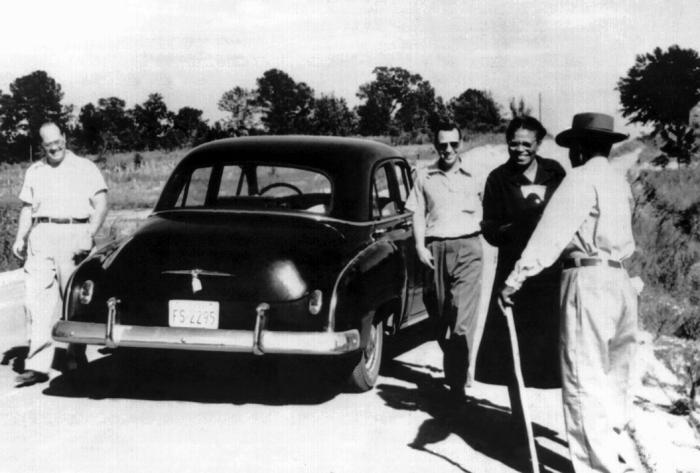
The U.S. Public Health Service and Tuskegee Institute began the study in 1932. It initially included 600 Black men: 399 with syphilis and 201 without it, who served as a comparison group. The researchers did not infect the men with syphilis. The men with the disease already had it when recruited. These distinctions matter because the documented wrong was severe enough without adding an invented act.
The researchers did not collect informed consent. They told the men they were receiving treatment for “bad blood,” a local expression covering several conditions, and offered examinations, meals and burial insurance. By the 1940s penicillin had become an effective treatment for syphilis. The study continued, and the men were not offered it. Some women contracted syphilis from men in the infected group, according to the CDC. The consequences extended beyond the names entered in the study register.
The study’s own purpose was to observe the course of untreated disease. That purpose required the researchers to keep observing even when treatment became available. To the men, however, the encounters carried the language and appearance of care. Medical exams and repeated visits could be real events while the central account of what the institution was doing remained false.
The National Archives describes surviving patient files containing histories, examinations, laboratory results and sometimes autopsies, letters to families or payments to next of kin. Those records show the scale of institutional attention. A file full of observations does not show that its subject knew he was being denied treatment. The archive also preserves the men’s names, including Green Adair, Coton Adams and James Adams; they were people before they were patient numbers.
The study converted a lack of treatment into a research condition. As penicillin became available, that choice acquired a clearer meaning: the men’s opportunity for care was subordinated to the continuation of the project. The later Belmont Report states the problem directly. Disadvantaged rural Black men carried the burden of studying a disease that was not confined to them, while demonstrably effective treatment was withheld.
The presence of Tuskegee Institute in the collaboration does not make the university the sole author of the study. Federal public health officials directed a federal project, later continued within the CDC. The institution’s name became the shorthand by which the case is known; locating responsibility requires naming the U.S. Public Health Service and its decisions.
Public reporting in 1972 prompted an official review. An advisory panel found the study ethically unjustified and recommended that it stop; the federal government announced its end that November. A lawsuit filed on behalf of participants and families led to a $10 million settlement in 1974. Medical benefits followed for survivors and eligible family members. These responses came after decades in which the study had already taken place.
In 1997, President Bill Clinton apologized on behalf of the federal government to survivors and families. The apology named men and family representatives, including Charlie Pollard, Carter Howard and Gwendolyn Cox, daughter of Sam Doner. It acknowledged betrayal. An apology is a record of state responsibility; it cannot retrospectively supply consent or return the years in which treatment was withheld.
Federal histories, the surviving patient-file register, the advisory response and the presidential apology establish the study’s purpose, the absence of informed consent and the withholding of treatment. They do not, on their own, establish the precise medical outcome for each named man, what every individual believed at each visit, or a single number of deaths caused by the denial of penicillin. Those questions require patient-level evidence and care with other possible causes.
The photographed visit is also a limited trace. It shows people together in a place and an activity identified by the CDC. It does not show disclosure, trust or permission. The gap between what the institution could record and what the men were allowed to know is the central fact of this case.
- What were the men told they would receive, and what did the researchers intend to observe?
- Who decided to continue the study after penicillin became available, and where is that decision recorded?
- What can the patient files establish about individual lives and outcomes, and what remains unknowable from the files alone?
The institution recorded the disease. It withheld the care.
Sources
- CDC, timeline of the U.S. Public Health Service Untreated Syphilis Study at Tuskegee: recruitment, treatment, disclosure and termination
- CDC, study background and FAQ: consent, comparison group, families and federal responsibility
- CDC Public Health Image Library, image 7854: Nurse Rivers and colleagues visiting a patient; public-domain photograph
- National Archives, patient medical records finding aid, Record Group 442: file contents and participant names
- National Commission, The Belmont Report (1979): justice, unequal research burdens and denied treatment
- White House, President Clinton’s apology to survivors and families, 16 May 1997
The study did not deliberately infect the recruited men. The article does not assign individual medical outcomes or a death count without patient-level examination. The image is evidence of a visit, not of consent.